

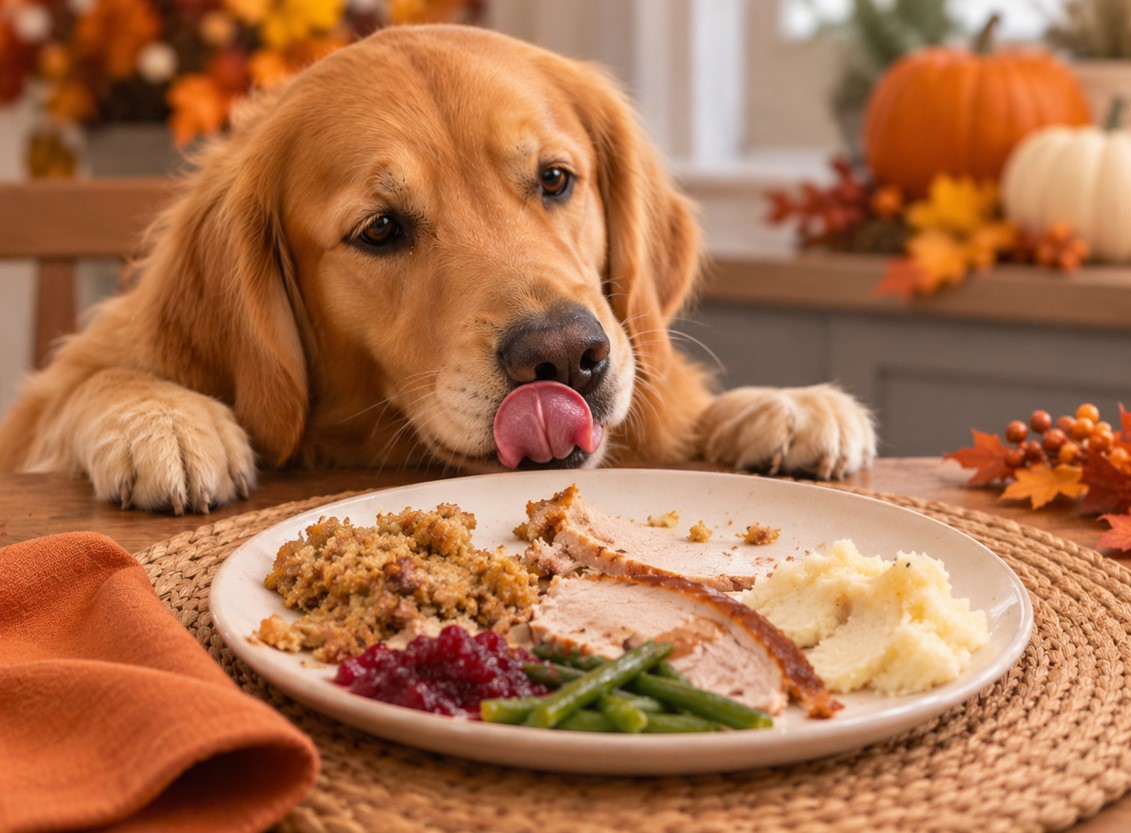
It usually happens when nobody’s looking.
Maybe your dog manages to grab a dinner roll from the counter. Maybe your cat sneaks a bite of turkey while you’re setting the table. Or perhaps you discover an empty dessert plate and realize the family dog has been enjoying Thanksgiving a little too much.
The first question is usually the same: Is my pet going to be okay?
The answer depends on what they ate, how much they consumed, and whether the food contained ingredients that are dangerous for animals.
At Canyon View Cares Veterinary Hospital in Orem, UT, we know that holiday food accidents can leave pet owners feeling uncertain about what to do next.
Let’s walk through some common Thanksgiving scenarios and explain when you should call a veterinarian.
Scenario 1: Your Dog Ate Half a Plate of Thanksgiving Dinner
A plate of turkey, stuffing, mashed potatoes, and gravy might sound delicious, but it’s not a great combination for your
dog.
The biggest concerns are often the fat content and seasonings.
Stuffing and gravy may contain onions or garlic, both of which can damage red blood cells in dogs and cats.
Turkey skin, butter, and rich sauces can cause gastrointestinal upset and potentially trigger pancreatitis.
Pancreatitis is inflammation of the pancreas and may cause vomiting, abdominal pain, diarrhea, lethargy, and loss of
appetite.
If your dog eats a large amount of rich holiday food, contact your veterinarian for advice.
If the meal contained onions or garlic, make sure to mention those ingredients specifically.
Scenario 2: Your Cat Got Into the Turkey
Cats are naturally interested in meat, so an unattended turkey platter can be especially tempting.
A small amount of plain, fully cooked turkey meat without bones, skin, or seasonings is generally safe for many healthy
cats.
However, Thanksgiving turkey may contain garlic, onion powder, butter, or other ingredients that aren’t appropriate for
cats.
Cats are particularly sensitive to onion and garlic toxicity.
Turkey skin is also fatty and can cause digestive upset.
If your cat eats seasoned turkey, contact your veterinarian and provide as much information about the ingredients as
possible.
Watch for vomiting, reduced appetite, unusual quietness, or changes in behavior.
Scenario 3: Your Dog Found a Raisin Cookie
This is one situation where you shouldn’t wait to see what happens.
Raisins and grapes can cause acute kidney injury in dogs.
The toxic amount is unpredictable, which means even a seemingly small exposure can be dangerous.
Early symptoms may include vomiting, decreased appetite, or lethargy.
However, kidney injury may develop before obvious symptoms become severe.
If your dog eats raisins or grapes, contact a veterinarian or animal poison control service immediately.
Do not attempt to induce vomiting unless specifically instructed by a veterinary professional.
Scenario 4: The Chocolate Pie Has Gone Missing
Chocolate desserts are another common holiday concern.
Chocolate contains theobromine and caffeine, which can affect the heart and nervous system of dogs and cats.
Dark chocolate and baking chocolate contain higher concentrations than milk chocolate.
The risk depends on your pet’s weight, the type of chocolate, and the amount consumed.
Symptoms may include vomiting, restlessness, rapid heart rate, tremors, or seizures.
If your pet eats chocolate, contact a veterinarian promptly.
Save the packaging or recipe information if available, since it can help determine the level of risk.
Scenario 5: Your Pet Ate Something Sugar-Free
Sugar-free doesn’t automatically mean pet-friendly.
Some sugar-free desserts, candies, and other packaged products contain xylitol.
In dogs, xylitol can cause a rapid drop in blood sugar and potentially severe liver injury.
Symptoms may include weakness, vomiting, trembling, difficulty walking, seizures, or collapse.
Because complications can develop quickly, suspected xylitol ingestion requires immediate veterinary attention.
Check the ingredient label and bring the packaging with you if emergency care is needed.
Scenario 6: Your Dog Swallowed a Turkey Bone
Dogs may see turkey bones as an irresistible treat, but cooked bones can be dangerous.
Cooking makes bones more brittle, increasing the risk of splintering.
Sharp fragments can injure the mouth, throat, stomach, or intestines.
Bones can also become lodged in the digestive tract and cause an obstruction.
If your dog swallows a turkey bone, contact a veterinarian for guidance.
Do not induce vomiting or attempt to force the bone through the digestive system with food.
Repeated vomiting, abdominal pain, difficulty swallowing, or loss of appetite may indicate complications that require
prompt evaluation.
Scenario 7: Your Pet Seems Sick the Day After Thanksgiving
Not every food-related problem appears immediately.
A pet that ate a fatty meal may develop digestive symptoms hours later.
Some toxic ingredients, particularly onions and garlic, may cause symptoms several days after ingestion.
Watch for vomiting, diarrhea, weakness, pale gums, abdominal discomfort, reduced appetite, or unusual behavior.
If your pet is showing concerning symptoms, contact your veterinarian.
For severe symptoms such as difficulty breathing, seizures, collapse, or repeated unproductive retching, seek emergency
veterinary care.
What Information Should You Give Your Veterinarian?
When calling about a food-related incident, try to have a few details ready.
Your veterinarian may ask about your pet’s weight, age, medical history, and current symptoms.
They’ll also want to know what food was eaten, approximately how much, and when the incident occurred.
If the food came from a package, keep the label nearby.
For homemade dishes, review the recipe for ingredients such as onions, garlic, chocolate, raisins, or xylitol.
Even if you’re uncertain about the amount consumed, sharing what you know can help your veterinarian recommend the next
steps.
Can You Treat Thanksgiving Food Poisoning at Home?
It’s important not to experiment with home remedies.
Hydrogen peroxide, salt, oil, milk, and over-the-counter medications can create additional risks when used incorrectly.
Never attempt to make a cat vomit at home.
Treatment depends on the food involved and your pet’s condition.
Some pets may require monitoring, while others need diagnostic testing, medications, intravenous fluids, or
hospitalization.
The safest approach is to contact a veterinary professional before attempting treatment.
How to Prevent Another Holiday Food Accident
If your pet has a history of stealing food, Thanksgiving is a good time to make a few changes.
Keep serving dishes away from counter edges, secure trash containers, and refrigerate leftovers promptly.
Remind guests not to share table scraps.
Consider offering your pet their regular meal or a veterinarian-approved treat before everyone sits down to eat.
For dogs that love searching for food, a puzzle feeder can provide a safer activity.
Cats may prefer a quiet room away from the kitchen and dining area.
Helping Orem Pets Stay Healthy Through the Holidays
Thanksgiving food accidents happen, even in careful households.
The important thing is recognizing potentially dangerous ingredients and knowing when to seek professional help.
At Canyon View Cares Veterinary Hospital in Orem, UT, we’re here to support local dogs, cats, and their families with
preventive care, nutrition guidance, and veterinary services.
If your pet gets into Thanksgiving food or begins showing signs of illness, contact our team for guidance.
For suspected poisoning or serious symptoms, seek emergency veterinary attention immediately.
A little awareness can help turn a stressful holiday surprise into a safer celebration for everyone.